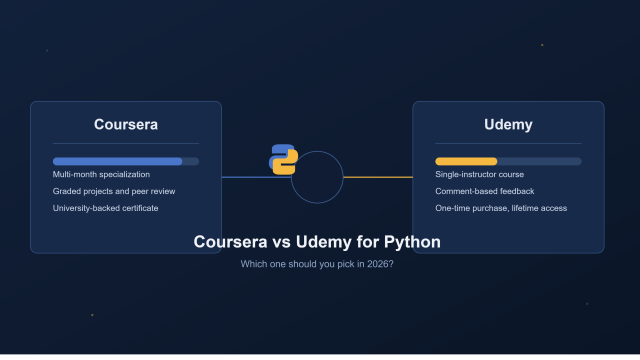
You have decided to learn Python, perhaps for data analysis, automation or a career change. Search for a course and Coursera and Udemy appear repeatedly, but they use different learning models. The Coursera vs Udemy for Python decision depends on whether you prefer a structured learning path or a flexible course focused on specific skills.
How Python Learning Platforms Work
Coursera offers courses and multi-course programs created with universities, companies and other organisations. Python programs can include video lessons, exercises, assessments and practical projects arranged in a structured sequence.
Udemy uses a marketplace model where individual instructors create and publish courses. This gives you a large selection of Python topics, but course depth and teaching quality can vary between instructors.
Other platforms serve different needs. DataCamp focuses heavily on data skills, while Pluralsight covers programming and broader technology topics. LinkedIn Learning also offers shorter courses for professional development.
Coursera vs Udemy for Python
Coursera makes sense if you want to follow a defined curriculum. A multi-course program can take you through Python fundamentals before progressing to subjects such as data analysis, automation or machine learning.
Assignments and assessments provide more structure than simply watching videos. This can help beginners who are unsure what to learn next.
Udemy gives you more freedom to select an individual course. You might choose a complete Python introduction or focus on one topic such as web development, automation or a particular library.
Courses are generally self-paced, so you can stop and continue according to your schedule. This flexibility is useful if you study around a full-time job or already understand the basics and only need a specific skill.
The trade-off is that you need to evaluate individual courses more carefully. Check the instructor, curriculum, update history and recent reviews before enrolling.
Certificates, Pricing and Practical Skills
Coursera and Udemy use different payment models depending on the course or program. Coursera offers subscriptions for some programs, while Udemy commonly sells individual courses. Pricing and access conditions can change, so check the current course page before paying.
Coursera also provides free access to selected course materials in some cases. What you can access without paying varies by program and may exclude assessments or certificates.
Certificates can support your resume, particularly when a program is associated with a recognised university or company. They should not be your only evidence of Python ability.
Practical projects usually tell employers more about what you can actually do. A small automation script, data analysis project or working application can demonstrate how you apply Python outside a course.
What to Check Before Enrolling
Start with the syllabus. A beginner course should cover Python fundamentals before introducing more specialised libraries and frameworks.
Look for coding exercises and projects rather than relying entirely on video lessons. Writing and debugging your own code is essential if you want the material to stick.
Check when the course was updated, especially if it covers libraries or tools that change regularly. Recent learner reviews can also reveal whether assignments are useful and explanations are clear.
Finally, consider your available time. A longer structured program requires consistent study, while a self-paced course gives you more freedom to adjust your schedule.
Coursera or Udemy: Which Should You Choose?
Choose Coursera if you prefer a structured curriculum, want to complete a longer learning path and value certificates associated with universities or companies.
Udemy can be the better choice if you want a specific Python skill, prefer self-paced study or want to purchase an individual course instead of committing to a longer program.
You can also use both at different stages. What matters most is writing code regularly and completing projects rather than collecting courses without applying what you learn.
FAQ
Is Coursera or Udemy better for Python beginners?
Coursera suits learners who prefer structured programs. Udemy can work well if you find a highly rated beginner course that matches your learning style.
Do you need a certificate to prove Python skills?
No. Certificates can support your resume, but projects and code samples provide practical evidence of your abilities.
Can you learn Python on Coursera for free?
Some courses provide access to selected materials without payment. Availability and restrictions depend on the specific course.
Is Udemy better for self-paced learning?
Udemy courses are generally designed for self-paced study, making them useful if you need flexibility.
Which is better for a data science career change?
Coursera can suit learners who want a structured path through Python and related data skills. Udemy can be useful for filling specific skill gaps.