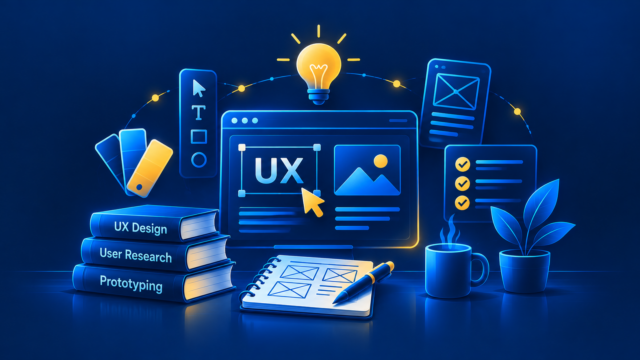
You enjoy using well-designed apps and wonder how their interfaces are created. Maybe you want to learn UX design without enrolling in a university program or committing to an expensive course. This beginner’s guide to learning UX design explains the essential skills, learning platforms and practical steps that can help you get started.
What Is UX Design?
User experience (UX) design focuses on making digital products useful, accessible and easy to navigate.
A UX designer studies how people interact with websites and applications, identifies usability problems and develops solutions.
UX design involves several activities:
- User research and interviews
- User journeys and information architecture
- Wireframing and prototyping
- Usability testing
- Collaboration with developers and product teams
UX and UI design are closely related but serve different purposes. UX focuses on the overall experience, while UI design addresses visual elements such as buttons, typography and layouts.
What Skills Should Beginners Learn First?
Understanding User Research
Start by learning how designers identify user needs.
Practice writing interview questions, analyzing feedback and creating simple user personas.
You can begin with familiar products, such as a shopping app or restaurant website.
Wireframing and Prototyping
Wireframes show the structure of a digital interface before visual details are added.
Prototypes demonstrate how users move between screens.
Figma is a popular tool for creating interface layouts and interactive prototypes. Its free options can be useful for initial practice.
Usability Testing
A design may look attractive but still confuse users.
Usability testing helps you observe how people complete tasks and identify problems.
Ask a few volunteers to try your prototype, then use their feedback to improve it.
Best Online Platforms for Learning UX Design
Different platforms suit different learning preferences.
Coursera offers structured UX courses and professional certificate programs, including options designed for beginners. Some programs include practical assignments and portfolio projects.
Udemy provides individual UX design courses covering tools, research methods and interface design. Course quality varies by instructor, so review the curriculum and student feedback.
Skillshare focuses on creative learning through video lessons and projects. It can be useful for exploring visual design and specific techniques.
LinkedIn Learning offers professional development courses covering UX principles, design workflows and related software.
Before choosing, compare the teaching approach, practical exercises and access conditions.
Free vs Paid UX Design Courses
You do not need an expensive subscription to explore UX design.
Free tutorials, introductory lessons and community resources can help you understand the fundamentals.
Some educational platforms also offer audit access, allowing you to study selected materials without purchasing a certificate.
Paid courses may provide structured learning paths, graded assignments or additional instructor support.
Check whether payment covers an individual course or a recurring subscription.
A certificate can demonstrate course completion, but employers may place greater importance on your practical skills and portfolio.
How to Build Your First UX Portfolio
You can create portfolio projects before working with real clients.
Choose a familiar website or application and identify a usability problem.
Then document your process:
- Define the problem and target users.
- Conduct basic research.
- Create wireframes and a prototype.
- Test the design with potential users.
- Explain what you changed and why.
Present your work as a case study rather than a collection of attractive screens.
Be transparent about whether the project was personal, educational or completed for a client.
How Long Does It Take to Learn UX Design?
Your learning timeline depends on your existing skills, available study time and goals.
Understanding basic UX concepts may take weeks, while developing a strong portfolio usually requires sustained practice.
Set manageable weekly goals and complete small projects regularly.
AI tools can help organize research notes or generate initial ideas, but you still need to evaluate their accuracy and usability.
Is Learning UX Design Worth It?
UX design can be a rewarding field for people interested in problem-solving, research and digital products.
However, completing a course does not guarantee employment.
This beginner’s guide to learning UX design provides a starting point, but your progress will depend on consistent practice and the quality of your projects.
Choose a course that fits your schedule, develop practical skills and build a portfolio that demonstrates your decisions.
FAQ
Can you learn UX design without experience?
Yes. Beginner courses introduce research, wireframing and usability principles without requiring previous design experience.
Do UX designers need coding skills?
Coding is not always required, although understanding basic web technologies can improve collaboration with developers.
Which platform is best for beginner UX courses?
Coursera offers structured programs, while Udemy and Skillshare provide flexible options for specific skills.
Is a UX design certificate worth it?
A certificate can support your learning record, but practical projects and demonstrated skills are also important.
Can you learn UX design for free?
Yes. Free tutorials, introductory courses and available audit options can help you build foundational knowledge.