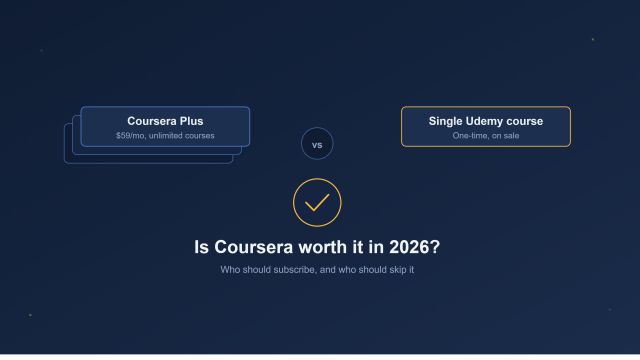
You want to learn data analysis before your next performance review, prepare for a career change or earn a certificate that adds something useful to your resume. Coursera appears in many searches, but paying for another learning platform only makes sense if you will actually use what it offers. So, is Coursera worth it in 2026? The answer depends on your goals, budget and preferred learning style.
How Coursera Works
Coursera offers courses created with universities, companies and other organisations. This distinguishes it from marketplaces where individual instructors independently publish most courses.
Programs range from individual courses to multi-course Specializations, Professional Certificates and degree programs. Depending on the course, learning may include videos, readings, quizzes, assignments and projects.
Some courses also provide access to selected materials without payment. Free access conditions vary and may exclude assessments or certificates, so check the specific course before enrolling.
Coursera Plus uses a subscription model that provides access to a large selection of eligible courses and programs. Not every Coursera offering is necessarily included, which makes checking your chosen program important before subscribing.
Coursera vs Udemy and Other Platforms
Coursera makes the most sense when you value structured learning and programs associated with recognised institutions or companies.
Udemy follows a different model. Individual instructors create courses that are generally purchased separately. This can work well when you need one specific skill and prefer self-paced learning without committing to a broader subscription.
Skillshare focuses more heavily on creative and project-based classes. LinkedIn Learning covers professional, business and technical skills through a subscription.
DataCamp concentrates on data skills, while Pluralsight focuses primarily on technology. edX is closer to Coursera because it also works with universities and organisations to provide structured online programs.
When Is Coursera Worth the Cost?
Coursera can provide good value if you plan to complete several eligible courses or a longer program during your subscription.
It can also make sense when a particular Professional Certificate or university-associated program is important to your learning goal. Structured learning paths remove some of the guesswork involved in deciding what to study next.
Certificates can support a resume, but their value varies. A credential associated with a recognised university or company may be more meaningful to an employer than a generic completion badge. However, completing a certificate does not guarantee a job or promotion.
Practical work matters too. If your course includes projects, use them to demonstrate what you learned. For fields such as data analysis, programming, marketing or design, a useful portfolio can complement your certificate.
Coursera may offer less value if you only need one narrow skill, do not care about a certificate or tend to leave subscription services unused for months.
What to Check Before You Subscribe
Start with the exact course or program you want rather than subscribing first and deciding later.
Check whether it is included in Coursera Plus, how long it is expected to take and what you need to complete to earn the certificate. Look at the syllabus to make sure the curriculum matches your current skill level.
Consider the learning format as well. Self-paced programs provide more flexibility, while courses with deadlines require more consistent study.
Finally, compare the total expected cost with alternatives. A subscription can be economical when you study regularly, but an individual course elsewhere may cost less if your goal is limited to one topic.
Is Coursera Worth It?
Coursera is worth considering if you want structured programs, credentials associated with established organisations and access to multiple courses. It is particularly useful when you have a clear learning goal and enough time to use your subscription consistently.
If you only need one practical skill, compare individual courses and free learning options before paying. The value comes from completing useful coursework and applying what you learn, not simply having an active subscription.
For a closer look at the platform, read our full Coursera review.
FAQ
Is Coursera Plus worth it for one course?
Usually, a subscription makes more sense when you plan to complete multiple eligible courses. Compare the current subscription price with the cost of your specific program.
Does Coursera offer free courses?
Some courses provide free access to selected learning materials. Certificates and assessments may require payment.
Are Coursera certificates recognised by employers?
Recognition varies by employer, industry and issuing organisation. Certificates can support your resume but do not replace relevant skills or experience.
Are Coursera courses self-paced?
Many offer flexible schedules, but formats vary. Check the individual program before enrolling.
How does Coursera compare with edX?
Both offer courses from universities and organisations. Your choice should depend on the specific program, credential, format and cost.